Curator's Pick
Geopolitics
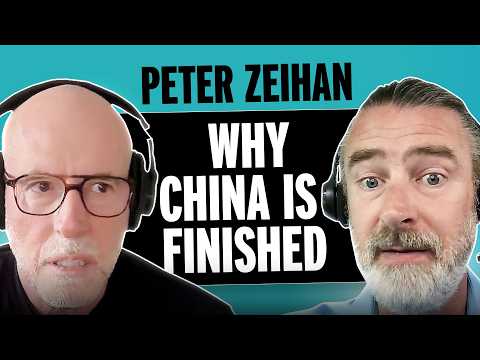
How the Global Order Is Collapsing — Peter Zeihan
Peter Zeihan
3 min read
Peter Zeihan
Geopolitical strategist Peter Zeihan explains why globalization is ending, demographics are destiny, and the world order we've known for 80 years is collapsing. A must-watch for anyone planning beyond the next quarter.
Personal insights by JK, COO
The post-WWII global order — free trade, American naval protection, stable supply chains — is ending. What comes next will reshape every industry, every supply chain, and every business model.
Zeihan's thesis is the single most important macro context for any business leader planning 5-10 years ahead. As I evaluate US expansion for Buster's, his demographic and geographic analysis directly influences which markets we target. His argument that North America is uniquely positioned for the post-globalization era is both terrifying and optimistic — and every operator needs to understand why.
Demographics are destiny — aging populations in China, Europe, and East Asia will collapse their economic models within a decade
The US Navy has guaranteed global trade routes since 1945 — that guarantee is ending
North America is the most self-sufficient continent: energy, food, demographics, and geography all favor it
Supply chain reshoring isn't a trend — it's a survival imperative for companies dependent on Asian manufacturing
Every CEO, COO, and board member making long-term capital allocation decisions. If your supply chain crosses an ocean, this is required viewing.
How I Apply This at Scale
Zeihan's thesis is the single most important macro context for any North American business leader planning beyond the next quarter. His argument — that the post-WWII global order is ending, and that North America is uniquely positioned to thrive in the post-globalization era — directly shapes our expansion strategy at Buster's.
The most concrete application has been in supply chain strategy. Zeihan's analysis of trade route vulnerability convinced me to accelerate our shift toward North American suppliers. We've reduced our dependence on imported ingredients and packaging by 35% over the past two years, even when the imported options were cheaper in the short term. The second-order thinking here is critical: cheaper today doesn't mean cheaper tomorrow if the supply chain that delivers it is geopolitically fragile.
For US expansion, Zeihan's demographic analysis is our primary market selection filter. His framework identifies which US regions have favorable demographics (young, growing populations), energy independence, and food security — the three pillars of post-globalization resilience. We're not expanding into markets just because they have high population density. We're expanding into markets that will still be economically vibrant in 2035, based on structural advantages that don't depend on global trade continuing as-is.
The systems thinking dimension is that Zeihan's framework connects macro trends to micro decisions in ways most operators miss. Demographics determine labor availability. Energy costs determine food costs. Trade route stability determines supply chain reliability. Each of these macro variables flows directly into unit economics. An operator who ignores geopolitics is making financial projections based on assumptions that may not hold for the life of a 10-year lease. We build geopolitical scenario analysis into every major capital allocation decision.
Enterprise Implementation Perspective
Zeihan's deglobalization thesis has profound implications for AI strategy in enterprises. As supply chains regionalize and labor markets tighten, AI becomes not just an efficiency tool but a strategic necessity for maintaining operational capacity.
At Buster's, Zeihan's demographic analysis — aging populations, shrinking labor pools — directly informed our AI-powered automation roadmap. We're not automating because it's trendy; we're automating because the labor market Zeihan describes won't support traditional staffing models within five years. Our predictive staffing system, automated inventory management, and AI-assisted food preparation processes are all designed to maintain service quality with fewer human hours per transaction.
The supply chain dimension is equally critical. As global trade routes become less reliable, the ability to rapidly switch suppliers, optimize local sourcing, and predict supply disruptions becomes a competitive advantage. We've built ML models that monitor commodity prices, weather patterns, and logistics data to predict supply chain disruptions 2-3 weeks before they hit. In a deglobalizing world, that early warning system is worth more than any cost savings from cheap imports.
Zeihan's framework also validates our investment in proprietary AI systems rather than depending on foreign-developed technology. In a world of competing geopolitical blocs, technology sovereignty matters. Our AI stack is built on open-source foundations with proprietary training data — ensuring we're not dependent on any single technology provider whose access could be disrupted by geopolitical events.
Every week, JK selects one video that changed how he thinks about business. You get the video, the context, and the operator's perspective — delivered straight to your inbox.
One email per week. No spam. Unsubscribe anytime.