Curator's Pick
Economics & Finance
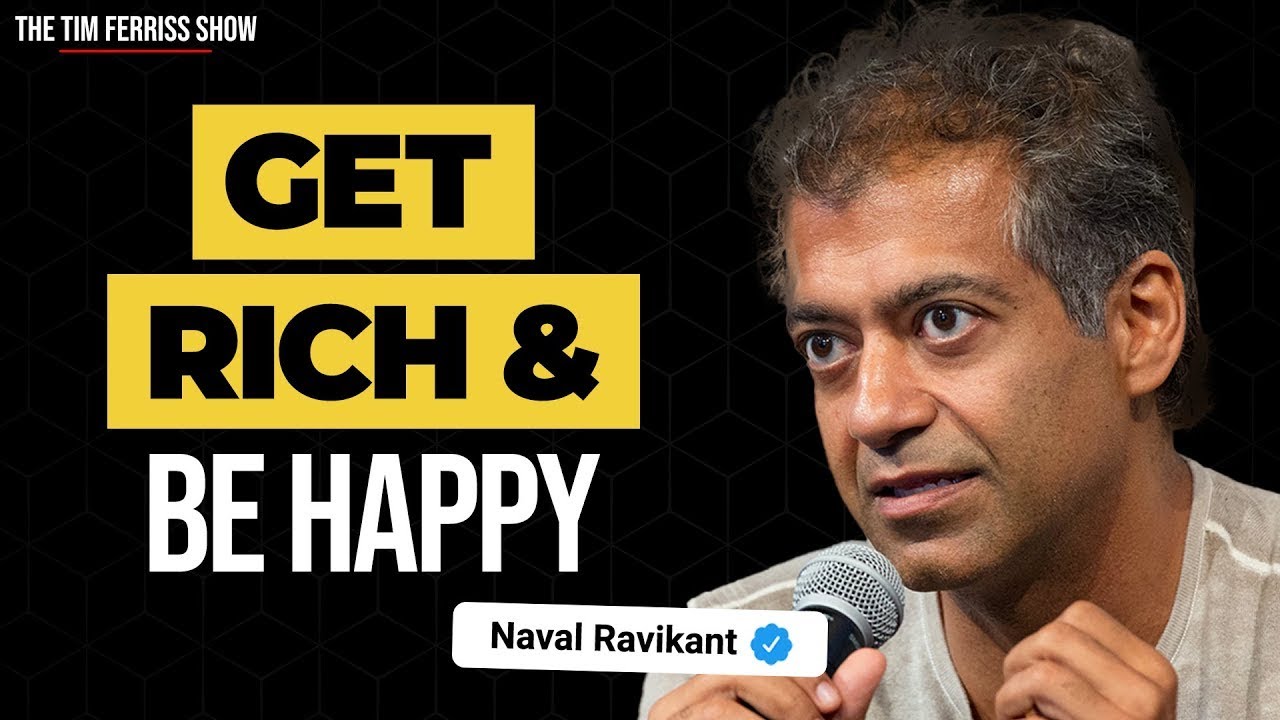
Wealth Without Labor: Naval Ravikant's Guide to Financial Freedom
Naval Ravikant
1 min read
Ray Dalio
Ray Dalio analyzes historical patterns of economic and geopolitical change. Learn to navigate cycles of empire rise and fall, and prepare for economic shifts.
Personal insights by JK, COO
History doesn't repeat, but it rhymes. The patterns of empire rise and fall — debt cycles, internal conflict, rising challengers — are playing out right now. Understanding these cycles is essential for long-term business planning.
Dalio's macro analysis is the most important context-setting video in this library. As a COO planning expansion into the US market, understanding the geopolitical and economic forces shaping North America over the next decade is not optional — it's strategic intelligence. Dalio's framework for understanding where we are in the long-term debt cycle, the internal order cycle, and the external order cycle directly influences our expansion timeline and market selection.
Three big cycles drive everything: the long-term debt cycle, the internal order cycle, and the external order cycle
Every empire follows the same pattern: rise through productivity → peak through financialization → decline through internal conflict
The current US-China dynamic mirrors historical power transitions — and those transitions are rarely peaceful
Diversification across currencies, countries, and asset classes is the rational response to cycle uncertainty
Every business leader making decisions with a 5-10 year horizon. If you're planning expansion, investment, or succession, this macro context is essential.
How I Apply This at Scale
Dalio's macro analysis is the most important context-setting framework for any business leader making decisions with a multi-year horizon. His three-cycle model — long-term debt, internal order, external order — provides the structural context that most operational leaders ignore. They're optimizing quarterly metrics while tectonic plates shift beneath them.
As I plan Buster's expansion into the US market, Dalio's framework directly influences our market selection and timing. His analysis of where we are in the long-term debt cycle (late stage, with rising interest rates and fiscal deficits) tells me to be conservative with leverage and focus on markets with strong underlying demographics. His internal order analysis (rising political polarization, wealth inequality) tells me to avoid markets where social instability could disrupt operations. His external order analysis (US-China competition, deglobalization) tells me that North American supply chains will become more valuable, not less.
The systems thinking dimension is that these three cycles interact with each other in non-linear ways. A debt crisis can trigger internal political instability, which can accelerate external power transitions. Understanding these interactions — not just each cycle in isolation — is what separates strategic planning from scenario planning. We run our expansion decisions through multiple Dalio-informed scenarios: What if interest rates stay high for a decade? What if US-China tensions escalate to trade war? What if domestic political instability disrupts specific markets?
The practical output is a market prioritization matrix that weights macro stability alongside traditional factors like demographics, competition, and real estate costs. Most franchise systems select markets based on population density and household income. We add a geopolitical risk layer that has already saved us from two expansion decisions that looked great on paper but were in markets with deteriorating macro fundamentals.
Enterprise Implementation Perspective
Dalio's cyclical framework becomes exponentially more powerful when combined with AI-driven analysis. The challenge with macro analysis is that the signals are noisy, the cycles are long, and human cognitive biases (recency bias, anchoring, narrative fallacy) distort interpretation. AI can process the signal-to-noise ratio at a scale and speed that human analysts cannot.
At Buster's, we've built a macro-monitoring dashboard that uses NLP to analyze thousands of economic reports, central bank communications, and geopolitical news sources daily. The system flags anomalies and trend shifts that align with Dalio's cycle indicators — rising debt-to-GDP ratios, political polarization indices, trade flow disruptions. This isn't replacing strategic judgment; it's augmenting it with real-time data processing.
The deeper application is using machine learning to stress-test our business model against Dalio's scenarios. We feed our financial models different macro assumptions — interest rate paths, commodity price scenarios, labor market shifts — and the ML system identifies which locations and which parts of our supply chain are most vulnerable under each scenario. That's enterprise-grade risk management powered by AI, informed by Dalio's historical pattern recognition. The combination of human strategic frameworks and machine analytical power is where the real competitive advantage lives.
Every week, JK selects one video that changed how he thinks about business. You get the video, the context, and the operator's perspective — delivered straight to your inbox.
One email per week. No spam. Unsubscribe anytime.