Curator's Pick
Economics & Finance
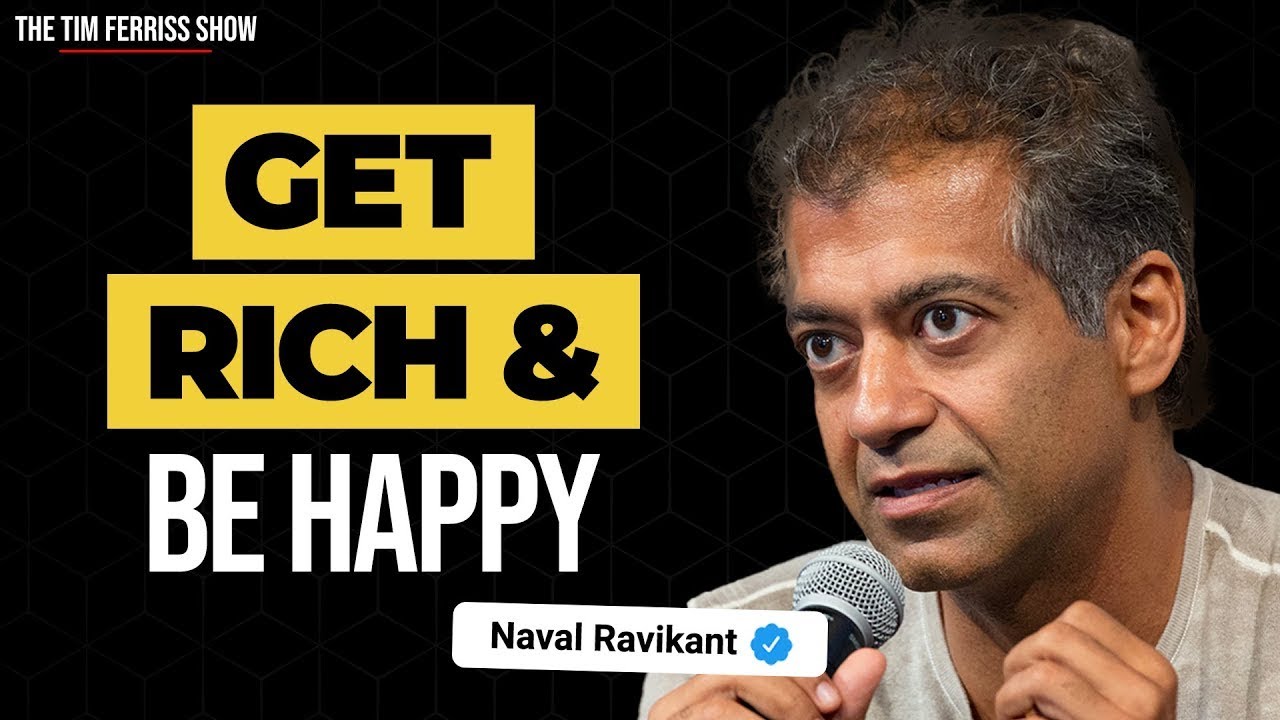
Wealth Without Labor: Naval Ravikant's Guide to Financial Freedom
Naval Ravikant
1 min read
Dan Ariely
Behavioral economist Dan Ariely reveals human motivation and irrational decision-making patterns. Understand psychology behind economic choices and behavior.
Personal insights by JK, COO
Humans are predictably irrational. We don't make decisions based on absolute value — we make them based on relative comparisons, anchoring, and emotional framing.
Ariely's work is essential for anyone in business because it reveals the hidden logic behind customer behavior. In QSR, we use his insights on anchoring and decoy pricing every day. Understanding that customers don't evaluate prices in isolation — they compare them to reference points — transformed our menu engineering. This isn't manipulation; it's understanding how human decision-making actually works.
The decoy effect: adding a third option changes how people evaluate the other two
Anchoring: the first number people see becomes the reference point for all subsequent judgments
Free is not just a price — it's an emotional trigger that overrides rational calculation
Social norms and market norms operate on different systems — mixing them destroys both
Anyone in pricing, marketing, or product design. If you're setting prices based on cost-plus margins without understanding behavioral economics, you're leaving money on the table.
How I Apply This at Scale
Ariely's behavioral economics research is the most directly profitable body of knowledge I've applied at Buster's. His work on anchoring, the decoy effect, and the power of 'free' transformed our menu engineering from intuition-based to science-based. The results were immediate and measurable.
The most impactful application was redesigning our menu using the decoy effect. We introduced a medium-sized combo that was deliberately priced to make the large combo look like a significantly better deal. The large combo's order rate increased 28% without any change to the food, the price, or the marketing. We just changed the context in which customers evaluated it. That's Ariely's core insight: people don't make decisions in absolute terms — they make them in relative terms, based on the options you present.
The anchoring principle reshaped our catering menu. By placing our premium catering package first (highest price, most items), every subsequent option felt like a deal by comparison. Average catering order value increased 19% in the first quarter after the redesign. Again, no change to the actual offerings — just a change in presentation order.
The systems thinking dimension is that behavioral economics principles compound across touchpoints. Menu design, pricing, promotional offers, loyalty programs, upsell scripts — each one is an opportunity to apply Ariely's insights. When you optimize each touchpoint individually, the gains are modest. When you design them as an integrated system where each element reinforces the others, the compound effect on revenue per customer is substantial. We've built what I call a 'behavioral architecture' across the entire customer journey, and it's one of our most defensible competitive advantages because it's invisible to competitors who only see our prices, not our pricing psychology.
Enterprise Implementation Perspective
Ariely's behavioral economics framework becomes dramatically more powerful when combined with AI personalization. Traditional behavioral nudges — menu design, anchoring, decoy pricing — are static. They're designed for the average customer. AI enables dynamic behavioral architecture that adapts in real-time to individual customer patterns.
At Buster's, we're building toward what I call 'personalized choice architecture.' Our recommendation engine doesn't just suggest items based on past orders — it presents options in sequences optimized for each customer's decision-making patterns. Some customers respond to anchoring (show the premium option first). Others respond to social proof (show what's popular in their area). Others respond to scarcity (limited-time offers). The AI system learns which behavioral lever works best for each customer segment and adjusts the digital ordering experience accordingly.
The enterprise-grade application is using reinforcement learning for dynamic pricing and promotion optimization. Instead of running A/B tests manually (slow, limited), our system continuously experiments with pricing presentations, bundle configurations, and promotional framing across thousands of daily transactions. Each transaction generates data that makes the next recommendation more effective. That's Ariely's behavioral insights operating at machine speed and scale — and it's the kind of AI application that generates compounding returns because the system gets smarter with every interaction.
Every week, JK selects one video that changed how he thinks about business. You get the video, the context, and the operator's perspective — delivered straight to your inbox.
One email per week. No spam. Unsubscribe anytime.