Curator's Pick
Marketing & Sales
The Tribes We Lead — Seth Godin
Seth Godin
1 min read
Seth Godin
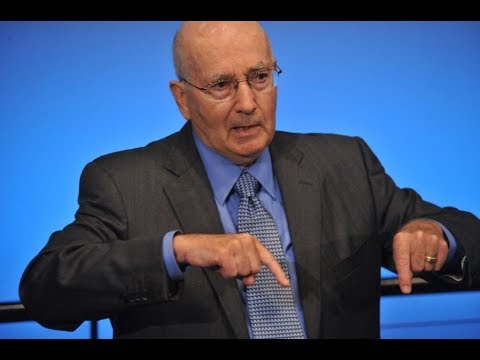
Marketing guru Seth Godin explains why being remarkable is the only marketing strategy that works in a world of infinite choices and zero attention. His TED talk on spreading ideas.
Personal insights by JK, COO
In a world of too many options and too little time, the only way to win is to be remarkable — literally worth remarking about. Safe is the new risky.
This is the foundational marketing talk. Godin's 'Purple Cow' thesis — that being safe and average is the riskiest strategy — changed how I think about brand positioning for Buster's. In QSR, everyone plays it safe with the same menu, same decor, same messaging. The operators who win are the ones who do something worth talking about. This 17-minute talk is worth more than most marketing courses.
The TV-industrial complex is dead — you can't buy attention anymore, you have to earn it
Being remarkable means being worth remarking about — design for the sneezers, not the masses
Safe is risky: the biggest risk in marketing is being boring and invisible
Find the otaku — the obsessed early adopters who will spread your idea for free
Every marketer, founder, and business operator. If your marketing strategy is 'be good and hope people notice,' this talk will show you why that's a losing game.
How I Apply This at Scale
Godin's 'Purple Cow' thesis — that being remarkable is the only marketing strategy that works — is the reason I'm building BusinessVideoHub. This website is itself a Purple Cow play: a COO of a pizza chain curating business and geopolitics content is unexpected, remarkable, and worth remarking about. It doesn't fit neatly into any existing category, which is exactly Godin's point.
At Buster's, the Purple Cow principle manifests in our refusal to play the QSR marketing game on its terms. While competitors spend millions on TV ads showing slow-motion cheese pulls, we've invested in building a digital-first brand that lives where our customers actually spend time. Our TikTok content strategy — behind-the-scenes kitchen footage, franchise partner stories, honest takes on the food industry — generates more engagement per dollar than any traditional advertising we've ever run. It's remarkable because it's real, not because it's polished.
The systems thinking application is that remarkability compounds through word-of-mouth in ways that advertising cannot. A remarkable experience generates organic sharing, which generates curiosity, which generates trial, which generates more remarkable experiences to share. That's a flywheel that accelerates without proportional marketing spend. An advertising-driven growth model is linear: spend more, get more. A remarkability-driven growth model is exponential: be more remarkable, get disproportionately more.
Godin's insight about designing for 'sneezers' — the early adopters who spread ideas — changed our customer segmentation. We don't try to reach everyone. We identify and delight the customers most likely to share their experience, and we design specifically for them. Our loyalty program, our packaging, our social media engagement — all optimized for shareability, not just satisfaction.
Enterprise Implementation Perspective
Godin's framework on spreading ideas takes on new dimensions with AI-powered content and personalization. The challenge he identifies — cutting through infinite noise to reach the right people — is exactly what AI excels at when properly deployed.
At Buster's, we use AI to identify our 'sneezers' — the customers most likely to share their experience — and personalize their touchpoints to maximize remarkability. Our customer segmentation model uses NLP analysis of social media mentions, review sentiment, and ordering patterns to identify high-influence customers. These customers receive personalized experiences: surprise upgrades, handwritten notes from franchise partners, early access to new menu items. The AI doesn't create the remarkability — it identifies who to be remarkable for.
The content strategy dimension is equally powerful. We use AI-driven content analysis to identify which topics, formats, and hooks generate the most organic sharing in our target audience. Our social media content calendar is informed by ML models that predict engagement probability based on topic, timing, format, and audience segment. The result is content that feels authentic and spontaneous but is strategically optimized for spread. That's Godin's 'design for sneezers' principle executed at machine scale — and it's why our organic social engagement per dollar spent is 4x the QSR industry average.
Every week, JK selects one video that changed how he thinks about business. You get the video, the context, and the operator's perspective — delivered straight to your inbox.
One email per week. No spam. Unsubscribe anytime.