Curator's Pick
Business Strategy
Naval Ravikant on Wealth Creation
Naval Ravikant
3 min read
Roger Martin
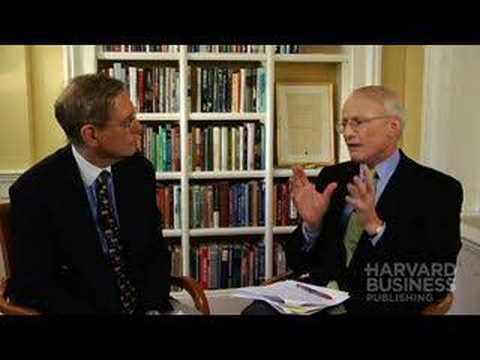
Former Rotman School dean Roger Martin explains why planning and strategy are fundamentally different. Most organizations confuse the two — and it costs them everything.
Personal insights by JK, COO
Planning is comfortable because it's about things you can control. Strategy is uncomfortable because it's about making bets on things you can't control. Most companies plan and call it strategy.
This video hit me like a truck. I realized that what we called 'strategic planning' at Buster's was actually just operational planning with a fancy title. Roger Martin's distinction forced me to separate the two: our plan is how we execute in each location; our strategy is the bet we're making about where the QSR market is going and how we position against it. Different conversations, different cadences, different people in the room.
Planning is about controlling resources; strategy is about making choices under uncertainty
Strategy requires a theory of winning — why customers will choose you over alternatives
Comfort is the enemy of strategy — if your strategy doesn't make you nervous, it's probably a plan
The strategy cascade: Where to Play → How to Win → Capabilities → Management Systems
Every executive who runs annual 'strategic planning' sessions. If your strategy document is mostly budgets and timelines, you don't have a strategy — you have a plan.
How I Apply This at Scale
Roger Martin's distinction between planning and strategy hit me like a freight train the first time I watched this. I realized that what we called 'strategic planning' at Buster's was actually just budgeting with aspirational language. Our 'strategy documents' were full of timelines, resource allocations, and operational targets — all things within our control. But strategy, as Martin defines it, is about making bets on things you can't control: where the market is going, what customers will value in five years, which competitors will emerge.
I restructured our entire planning process based on Martin's cascade. Now we have two separate conversations that happen in different rooms with different people. The strategy conversation asks: Where will we play? How will we win? What capabilities do we need? The planning conversation asks: Given our strategy, what resources do we allocate, what timelines do we set, what metrics do we track? The strategy conversation happens quarterly with our senior leadership team. The planning conversation happens monthly with our operations team. Mixing them was our biggest mistake — and it's the mistake I see every franchise system making.
The systems thinking dimension is that strategy and planning create a feedback loop. Strategy informs planning (top-down), but operational data from planning execution should inform strategy revision (bottom-up). Most organizations only have the top-down arrow. We've built data pipelines that surface operational signals — customer behavior shifts, unit economics trends, competitive movements — directly into our strategy conversations. That feedback loop is what makes our strategy adaptive rather than static.
Martin's point about comfort being the enemy of strategy is something I repeat to my team constantly. If our strategy doesn't make us nervous, it's probably a plan. Our bet on AI-powered operations, our expansion into the US market, our decision to build proprietary technology instead of buying off-the-shelf — these are genuine strategic bets that could fail. That discomfort is the signal that we're actually doing strategy, not just planning.
Enterprise Implementation Perspective
Martin's strategy-vs-planning distinction becomes even more critical in the AI era because AI dramatically changes the 'Where to Play' and 'How to Win' calculations. The strategic question isn't 'should we adopt AI?' — that's a planning question. The strategic question is 'how does AI change the competitive landscape, and where does that create asymmetric opportunities for us?'
At Buster's, AI has shifted our 'How to Win' from operational excellence alone to what I call 'intelligent operations' — a system where every operational decision is augmented by predictive analytics. Our demand forecasting models don't just predict orders; they inform real-time staffing adjustments, dynamic prep schedules, and even marketing spend allocation. That's strategy execution at a speed and precision that was impossible before ML.
The feedback loop Martin describes — strategy informing planning, planning data informing strategy — is exactly what AI enables at enterprise scale. We've built dashboards that use anomaly detection to flag when operational metrics deviate from strategic assumptions. When our AI detects that customer ordering patterns in a market are shifting, that signal goes directly to our strategy team, not just our operations team. AI doesn't replace strategic judgment — it accelerates the feedback loop that makes strategic judgment more accurate.
Every week, JK selects one video that changed how he thinks about business. You get the video, the context, and the operator's perspective — delivered straight to your inbox.
One email per week. No spam. Unsubscribe anytime.